

Decentralized Finance, or DeFi, is one of the most revolutionary developments in the crypto world. It’s changing how we borrow, lend, invest, and earn — without banks or traditional financial institutions. But what exactly is DeFi, and why should you care?
What Is DeFi?
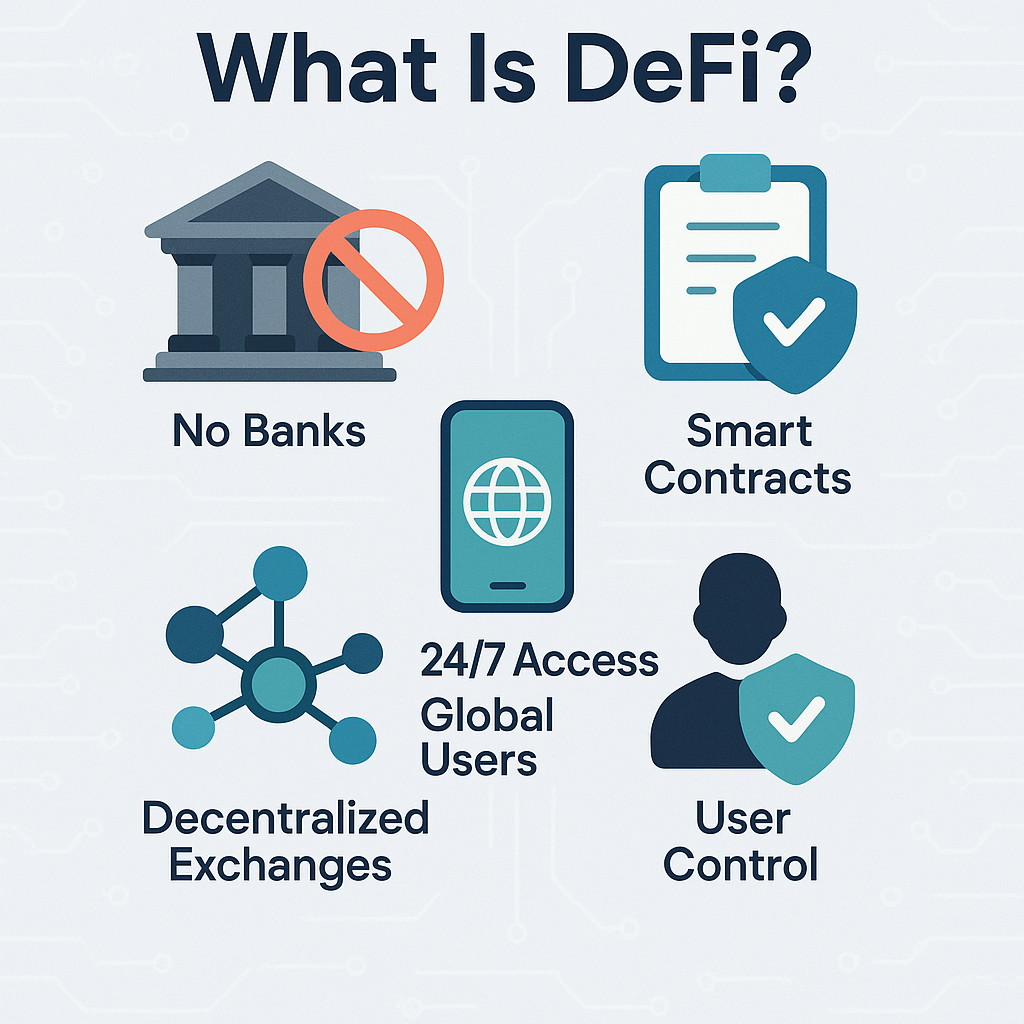
DeFi stands for Decentralized Finance, a system where financial products are accessible through public blockchain networks — primarily Ethereum — without relying on centralized institutions like banks, brokers, or exchanges.
DeFi allows anyone with an internet connection to access financial services like loans, interest earning, trading, and asset management, all through decentralized applications (dApps).
How Does DeFi Work?
DeFi operates using smart contracts, which are self-executing codes on the blockchain. These contracts replace traditional intermediaries, automating functions like:
- Lending and borrowing
- Swapping tokens (like through Uniswap)
- Earning interest by providing liquidity
- Managing assets in decentralized protocols
Why Is DeFi Important?
1. Accessibility
Anyone in the world can access DeFi platforms 24/7 — no credit checks, no banks, no restrictions.
2. Transparency
All transactions are recorded on public blockchains, meaning users can audit, verify, and track where their funds are.
3. Control
Users retain full control of their funds and decisions. No central authority can freeze or reverse your transactions.
4. Innovation
DeFi enables new financial models like yield farming, flash loans, and automated market makers (AMMs), which are not possible in traditional finance.
Risks and Considerations
Like any new technology, DeFi comes with risks:
- Smart contract bugs or exploits
- Impermanent loss for liquidity providers
- Volatile returns and token price swings
- Lack of regulation and user protection
Understanding these risks is crucial before using DeFi platforms.
Common DeFi Use Cases
- Lending/borrowing platforms (e.g., Aave, Compound)
- Decentralized exchanges (e.g., Uniswap, Sushiswap)
- Stablecoin protocols (e.g., DAI)
- Yield aggregators (e.g., Yearn Finance)
Final Thoughts
DeFi is creating a more open, permissionless, and user-driven financial system. Whether you’re an investor, developer, or curious beginner, understanding decentralized finance gives you a glimpse into the future of how money works.
👉 Click here to explore a beginner-friendly course that covers DeFi, Ethereum, wallets, and more
Leave a Reply