

Cryptocurrencies have become one of the most talked-about financial innovations of the last decade. But for many beginners, the concept still feels unclear. So, let’s break it down in a simple, practical way.
What Are Cryptocurrencies?
Cryptocurrencies are digital or virtual currencies that use cryptography to secure transactions. Unlike traditional money, they are decentralized, meaning they are not issued or controlled by any government or central authority.
The most well-known cryptocurrency is Bitcoin, but there are thousands of others like Ethereum, Solana, and Litecoin.
Instead of being printed like paper money or managed through banks, cryptocurrencies exist entirely online and are recorded on a blockchain — a public, distributed digital ledger.
How Do Cryptocurrencies Work?
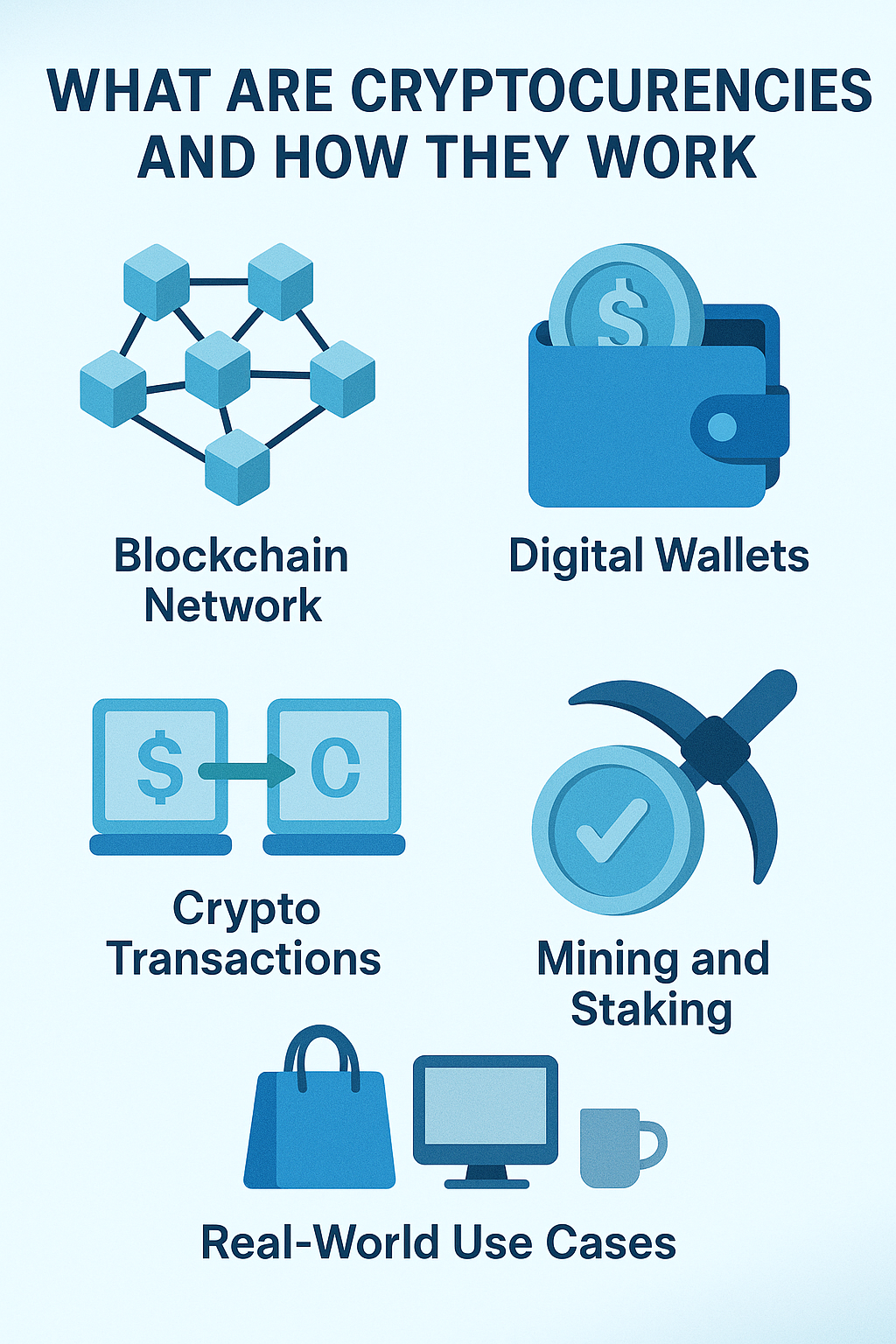
Here’s a simplified overview of how they function:
- Blockchain Technology
Every transaction made with a cryptocurrency is recorded on a blockchain. This record is permanent, transparent, and cannot be altered. - Digital Wallets
Users store their crypto assets in digital wallets — software or hardware-based tools that manage your private keys and allow you to send or receive crypto securely. - Mining or Staking
Some cryptocurrencies (like Bitcoin) are created through a process called mining, where computers solve complex problems. Others (like Ethereum 2.0) use staking, where users lock up coins to help secure the network and earn rewards. - Transactions and Transfers
You can send cryptocurrency directly to another person anywhere in the world — with low fees, no bank interference, and in just a few minutes.
Why Do Cryptocurrencies Matter?
- Decentralization: No central bank can block or manipulate your transactions.
- Accessibility: Anyone with internet access can participate.
- Transparency: Every transaction is publicly recorded.
- Financial innovation: Crypto opens doors to decentralized finance (DeFi), NFTs, and global investment opportunities.
Common Use Cases of Cryptocurrencies
- Buying and selling goods or services
- Long-term investment (“HODLing”)
- International money transfers
- Participating in blockchain projects or DAOs
- Earning passive income through staking or yield farming
Final Thoughts
Understanding what cryptocurrencies are and how they work is the first step toward exploring this fast-growing digital economy. But learning in the right way is essential to avoid confusion or mistakes.
If you’re curious about diving deeper into the world of crypto safely and confidently, a structured beginner course can guide you step by step.
👉 Click here to explore a complete crypto course for beginners
Leave a Reply