

In the world of Web3 and blockchain, one concept is gaining attention for changing how communities, companies, and even economies are organized: the DAO. Short for Decentralized Autonomous Organization, a DAO is a new way to coordinate people and resources using blockchain technology.
But what exactly is a DAO, how does it function, and why does it matter? Let’s break it down.
What Is a DAO?
A DAO is an organization run by code instead of central leadership. It uses smart contracts on the blockchain to set rules and automatically enforce decisions. Think of it as a transparent, borderless, and community-driven company — no CEOs, no managers, just members with voting power.
In a DAO:
- Rules are written in smart contracts
- Anyone can become a member by owning governance tokens
- Decisions (like funding or updates) are made by community vote
- Actions are executed automatically through code
Key Features of DAOs
- Decentralization: No single point of control; governance is distributed
- Transparency: All transactions and rules are on the blockchain
- Automation: Smart contracts handle operations without intermediaries
- Token-based voting: Members use tokens to vote on proposals
How DAOs Work in Practice
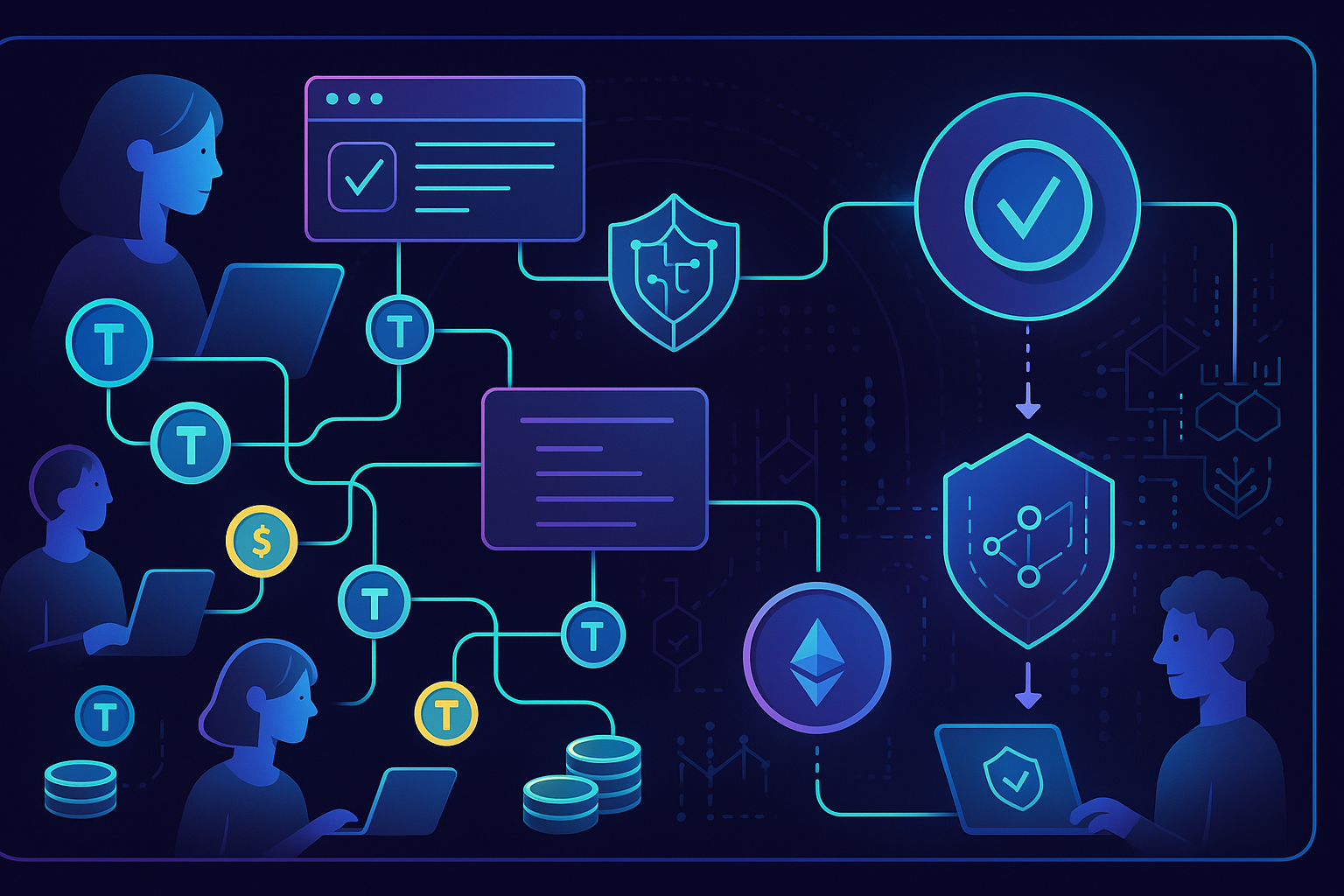
Let’s say a community wants to fund open-source software. Here’s how a DAO might handle it:
- Developers submit proposals for funding
- Token holders vote on which proposals should be approved
- If a proposal passes, smart contracts release funds automatically
No banks, no delays, no middlemen — just code and community consensus.
Real-World Examples of DAOs
- Uniswap DAO – Governs the largest decentralized exchange protocol
- MakerDAO – Manages the DAI stablecoin and collateral systems
- ApeCoin DAO – Handles governance for the Bored Ape ecosystem
- Gitcoin DAO – Funds public goods like open-source projects
Why DAOs Matter
DAOs are redefining how people collaborate at scale:
- Enable borderless, trustless coordination
- Empower individuals to have a direct voice in governance
- Reduce administrative overhead and bureaucracy
- Support innovation in finance, art, gaming, and social impact
They are the next evolution of digital organizations — flexible, community-owned, and transparent by design.
Final Thoughts
As Web3 adoption grows, DAOs will likely play a bigger role in everything from startups to governments. Whether you’re building a DeFi protocol or launching a creative collective, DAOs offer a new blueprint for collaboration.
Leave a Reply