

Smart contracts are one of the most important innovations in blockchain technology. These self-executing digital agreements are changing the way people do business, manage transactions, and build decentralized applications. But what exactly are smart contracts, and why are they such a game-changer?
Let’s break it down in simple terms.
What Is a Smart Contract?
A smart contract is a computer program that runs on a blockchain. It automatically executes, enforces, or verifies the terms of a contract without the need for a third party.
Think of it as a digital vending machine:
- You send a certain input (e.g., cryptocurrency)
- The machine checks if the condition is met
- If yes, it delivers the expected output (e.g., access to a service, transfer of funds)
Everything happens transparently and securely on the blockchain.
Key Characteristics
- Trustless: No middleman or intermediary is required
- Transparent: Code and transaction history are visible on the blockchain
- Immutable: Once deployed, the contract can’t be changed
- Automatic: Executes actions when conditions are met
What Can Smart Contracts Do?
Smart contracts power some of the most popular crypto use cases:
- Decentralized Finance (DeFi)
- Lending, borrowing, and yield farming protocols (e.g., Aave, Compound)
- NFT Marketplaces
- Automate royalties, ownership transfer, and bidding (e.g., OpenSea)
- DAOs (Decentralized Autonomous Organizations)
- Encode voting rules and fund management
- Insurance and Escrow
- Automatically pay claims when certain conditions are met
- Gaming and Virtual Worlds
- In-game assets and rules run on-chain
How They Work (Technically Speaking)
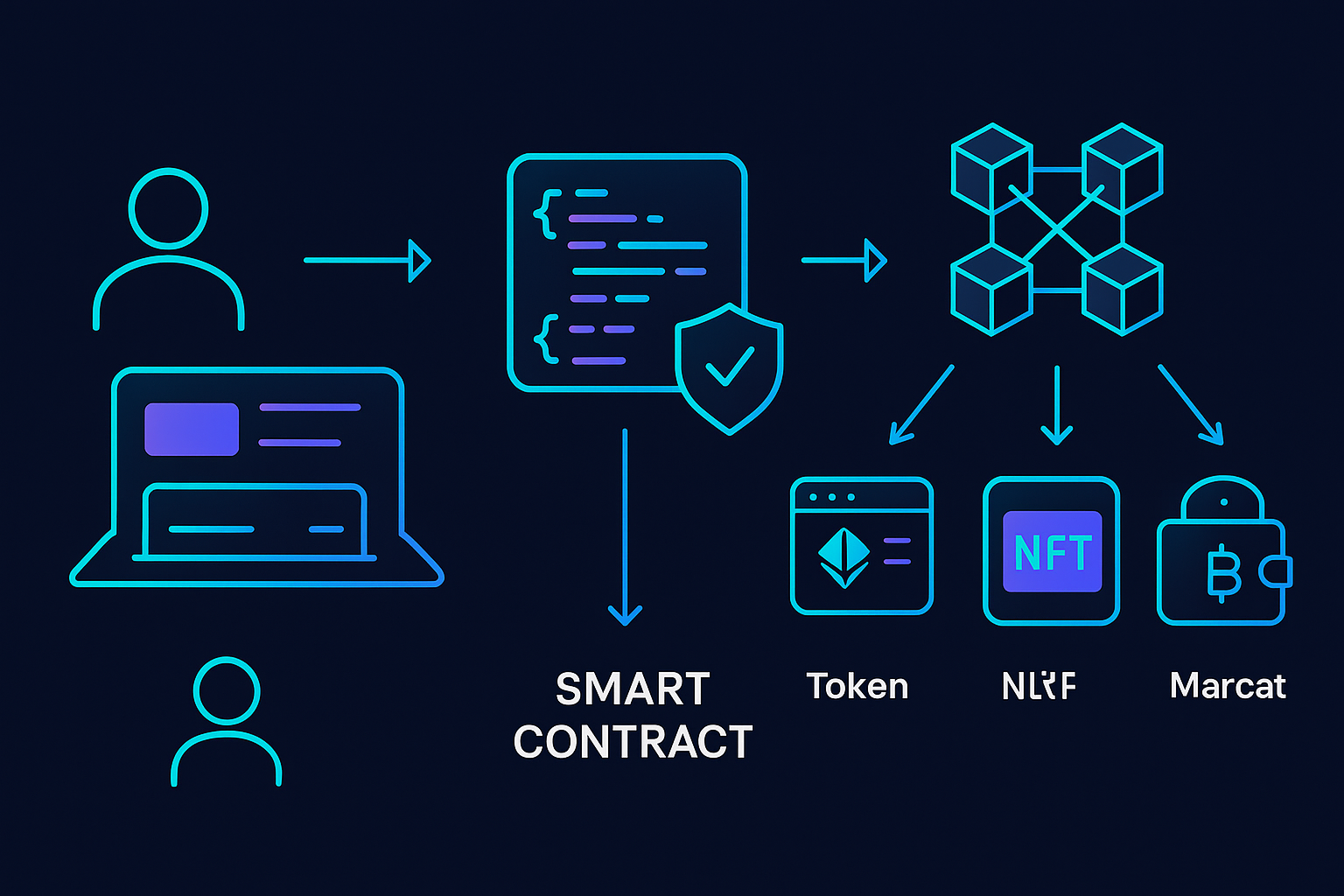
Smart contracts are written in programming languages like Solidity (for Ethereum) and deployed on a blockchain.
Once deployed:
- They live at a blockchain address
- Users interact with them by sending transactions
- If the input matches a condition in the contract’s logic, the code runs and performs the programmed action
Because they’re on-chain, everything is verifiable and tamper-proof.
Why Smart Contracts Matter
Smart contracts are the backbone of Web3. They:
- Replace the need for lawyers and intermediaries
- Enable unstoppable, censorship-resistant applications
- Reduce costs and increase efficiency
They are unlocking a new digital economy where code is law — from finance to art, governance to identity.
Final Thoughts
Smart contracts may sound complex, but their core idea is simple: trusted automation. As adoption grows, we’ll continue to see more industries use blockchain-powered agreements to eliminate friction and build new business models.
Leave a Reply