
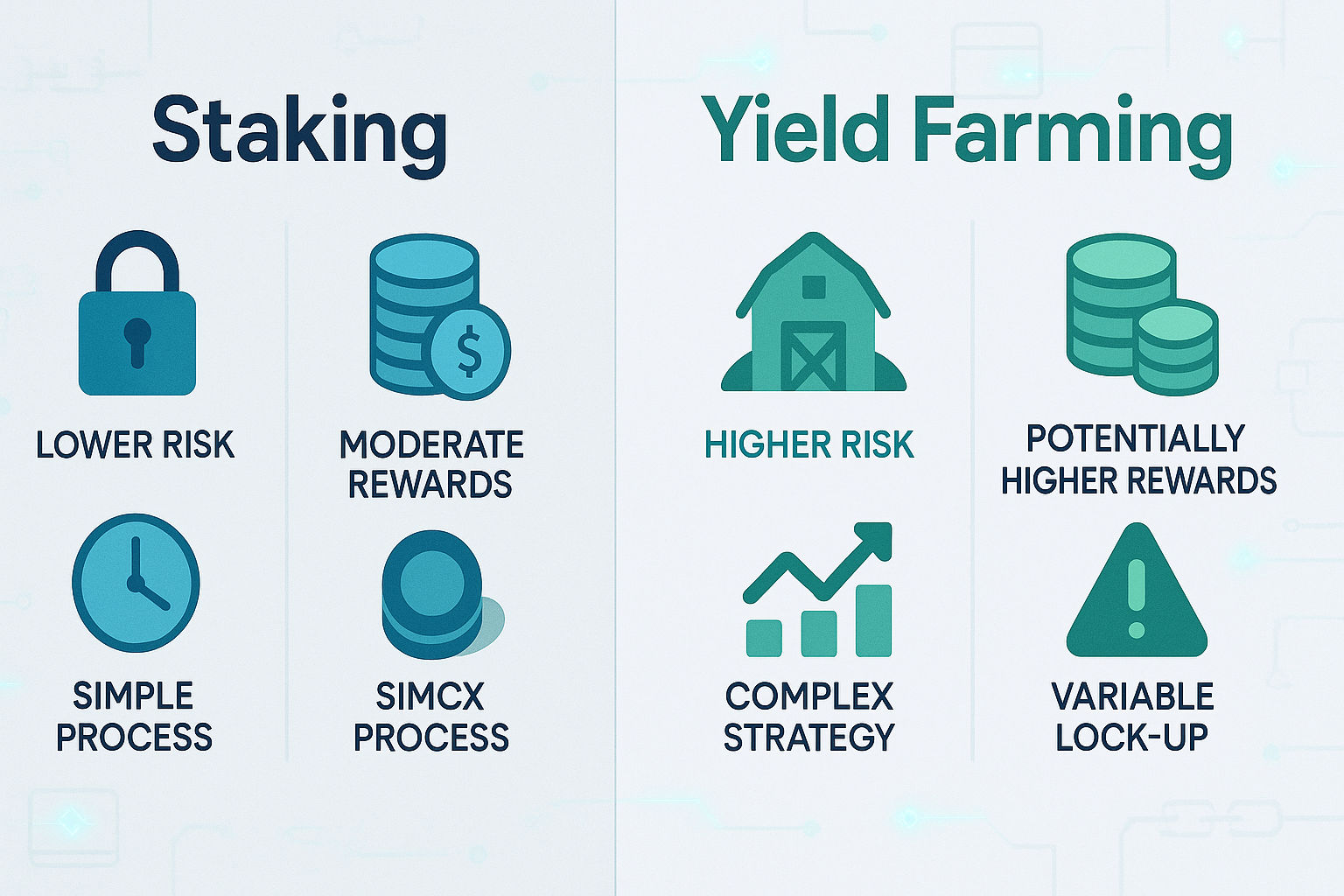
As the decentralized finance (DeFi) space continues to grow, crypto investors are discovering new ways to earn passive income. Two of the most popular methods are staking and yield farming. While they may seem similar at first glance, they serve different purposes, involve different levels of risk, and operate in unique ways.
This article breaks down the core differences between staking and yield farming — helping you decide which strategy might suit your goals best.
What Is Staking?
Staking involves locking up your cryptocurrency in a blockchain network to help secure and validate transactions. In return, you earn rewards.
- Common in Proof of Stake (PoS) or Delegated Proof of Stake (DPoS) blockchains (e.g., Ethereum, Cardano, Solana)
- Rewards are typically paid in the same cryptocurrency
- The more you stake, the higher your rewards
- Staking can be done through wallets, exchanges, or staking pools
Pros:
- Relatively low risk (on reputable networks)
- Predictable returns
- Supports the blockchain ecosystem
Cons:
- Funds are locked for a period (less flexibility)
- Potential slashing if node misbehaves (rare)
What Is Yield Farming?
Yield farming (also called liquidity mining) is a DeFi strategy where users provide liquidity to decentralized platforms (like Uniswap, Aave, Curve) in exchange for interest, rewards, or fees.
- Requires you to deposit tokens into liquidity pools
- Rewards may come in platform tokens or a mix of assets
- Returns are often higher but more volatile
Pros:
- High earning potential
- Incentives in multiple tokens
- Often flexible withdrawal
Cons:
- Complex for beginners
- Risk of impermanent loss
- Smart contract vulnerabilities
- Platform risk (rug pulls, bugs)
Key Differences at a Glance
| Feature | Staking | Yield Farming |
|---|---|---|
| Goal | Support network + earn | Maximize return on deposited assets |
| Risk Level | Lower | Higher |
| Complexity | Simple | Advanced |
| Rewards | Native tokens | Interest, tokens, trading fees |
| Lock-up Period | Usually fixed | Often flexible |
| Best for | Long-term holders | Active users seeking high yields |
Which One Should You Choose?
It depends on your risk appetite and experience:
- If you prefer simplicity and stability, staking may be ideal
- If you’re comfortable with DeFi tools and higher risk, yield farming could offer better rewards
Many seasoned investors use both strategies — staking core assets and farming with a smaller, experimental portion of their portfolio.
Final Thoughts
Both staking and yield farming are valuable tools for earning passive income in the crypto world. By understanding how they work and their unique risks, you can build a diversified strategy that fits your financial goals.
Leave a Reply